
Achieving net zero will require deep collaboration across our entire value chain: from suppliers and sub-contractors to customers, policymakers, and industry partners. Engaging stakeholders early and effectively is essential to aligning expectations, investing appropriately, accelerating innovation, and removing barriers to progress.
We recognise that delivering change at scale involves addressing complex challenges, including data gaps, differing levels of readiness, and competing priorities. We are committed to overcoming these through partnership, shared accountability, and continuing to lead through groups such as the Future Homes Hub.
This page explains how we are collaborating to enable a successful transition.
1. Strategic financial integration and the cost of transition
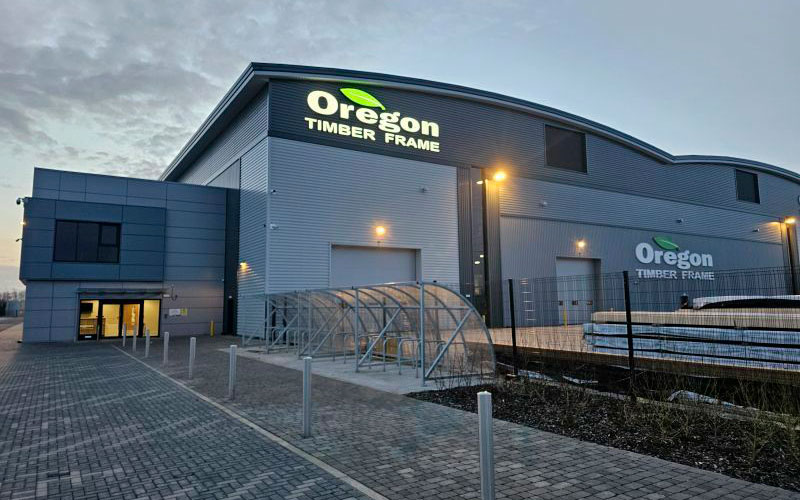
Embedding net zero into financial planning ensures investment, business decisions and incentives support decarbonisation, while maintaining long-term business viability. We are investing in low-carbon solutions such as Oregon Timber Frame, integrating climate risks into financial frameworks, and working with industry partners to enable a cost-effective transition. This enables us to mitigate potential impacts on viability while delivering a cost effective and sustainable pathway to net zero.
2. Innovation and delivery
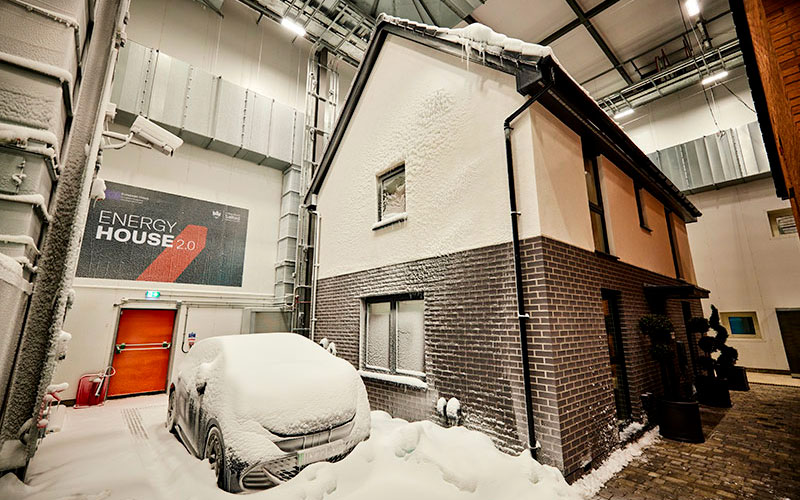
Innovation is central to scaling low-carbon solutions across our operations, supply chain and customer offer. Strong governance, cross sectoral collaboration and continuous learning help turn successful trials into practical, long-term solutions that support net zero delivery.
3. People, skills and culture
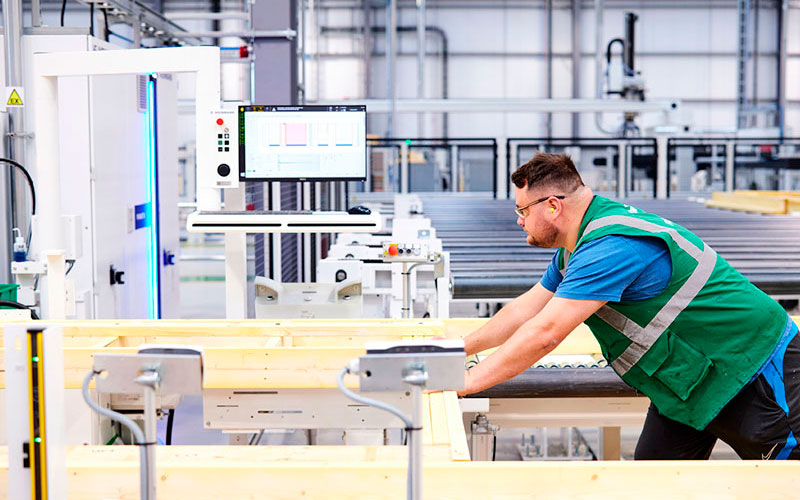
Achieving net zero requires the skills, culture and accountability needed to deliver change across our business and supply chain. We are preparing for future workforce needs, embedding sustainability into decision-making and supporting a fair transition to a low-carbon economy.
4. Robust and transparent data
Reliable data is essential for tracking progress and informing decisions across our Net Zero Transition Plan. We are improving data quality through quantity-based reporting, greater use of specific material information from Environmental Product Declarations, stronger governance and enhanced reporting systems.

5. Stakeholder engagement
Delivering net zero requires collaboration with customers, suppliers, colleagues, investors and communities across our value chain. Ongoing engagement helps shape our approach, accelerate progress and support our ambition to make sustainable living a reality. Read more about stakeholder engagement here.
Overcoming challenges and barriers
In order to successfully deliver our transition to net zero, there are critical challenges and barriers to overcome.
Our Transition Plan is shaped by a range of factors including policy developments, technological advancements, and market conditions. Some of these elements remain outside of our direct control, but we are taking active steps to mitigate these barriers and influence change, as outlined below.
| Challenges and barriers | Our response | |
|---|---|---|
 |
Effective regulation: Absence of regulatory clarity required to achieve net zero, with uncertainty over future standards, implementation timings and transition periods. |
|
 |
Clear targets with time to deliver: Without a defined and clear roadmap, and a consistent approach to measurement and reporting, it is challenging to build confidence and unlock investment at scale. | |
 |
A decarbonised grid: Our ability to reduce emissions relies on the UK decarbonising the energy grid by 2030, in line with national targets. Delays to grid reform pose a material risk to all-electric developments, and to our suppliers who also require a decarbonised grid to achieve their goals. | |
 |
Net zero ready skills and supply chains: The construction sector faces a skills shortage. Addressing this requires a clear view of the skills gap, targeted investment in future capabilities, and support for retraining workers from high-carbon occupations. Supply chains need support adopting new technologies and meeting evolving low-carbon standards through training, standards and qualification routes. | |
 |
Confident consumers: Demand for energy-efficient homes is rising but trusted advice, accredited products, and clear, consistent messaging are needed to build confidence. |
|
 |
Clear standards consistently measured: Fragmented and inconsistent standards hinder progress. Customers need clear, simple measures supported by consistent environmental data and transparent methodologies. | |
 |
Impactful green finance: For home purchasers, green finance will drive and unlock consumer demand with energy efficiency built into affordability statements at the point of consideration. |
|
 |
Technology and policy dependence: Low-carbon solutions depend on emerging technologies (like electric plant or hydrogen infrastructure) not yet widely available. Trials, safety standards and supportive infrastructure are needed to accelerate roll-out and ensure long-term scalability. |
|